
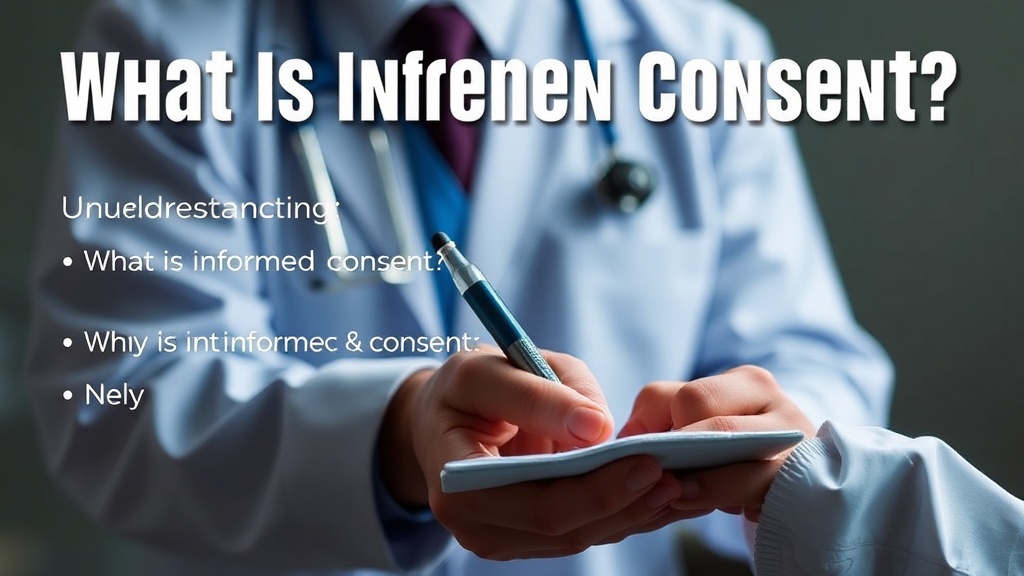
Understanding What is informed consent
In my experience with healthcare, research, and even legal discussions, I’ve often wondered what exactly is informed consent. From what I’ve learned, it’s a fundamental concept that ensures individuals are fully aware of what they’re agreeing to before participating in medical procedures, research studies, or other activities that impact their rights or well-being. I want to share what I’ve discovered because I believe understanding is informed consent is essential for protecting personal autonomy and fostering trust in various fields.
Simply put, is informed consent a process where I, as a patient or participant, receive all relevant information about a proposed intervention or decision. This includes details about potential risks, benefits, alternatives, and what the procedure or study involves. The goal is for me to make a voluntary, educated decision about whether to proceed. In my experience, grasping is informed consent helps me feel empowered and confident in my choices, knowing I’m fully aware of what I’m agreeing to.
The Core Principles of is informed consent
Understanding the core principles behind is informed consent has been eye-opening for me. From what I’ve researched, there are several key elements that make <a href="#INTERNAL_LINK_is informed consent valid and effective:
1. Disclosure of Information
I’ve discovered that transparency is the cornerstone of <a href="#INTERNAL_LINK_is informed consent. This means that I must be provided with all relevant information in a language I can understand—such as the purpose of the procedure, risks, benefits, and alternatives. In my personal experience, when healthcare providers take the time to explain things clearly, I feel more comfortable and willing to participate.
2. Comprehension
It’s not enough to just receive information; I believe I also need to understand it. From what I’ve learned, providers should ensure that I truly grasp what I’m consenting to. I recommend asking questions and engaging in discussions to clarify any doubts because is informed consent only meaningful when I comprehend the details.
3. Voluntariness
In my journey, I’ve realized that my consent must be given freely, without coercion or undue influence. I’ve encountered situations where I felt pressured, and I know that compromises <a href="#INTERNAL_LINK_is informed consent. True informed consent requires that I make my decision voluntarily, based on my own values and preferences.
4. Competence
Finally, I understand that for <a href="#INTERNAL_LINK_is informed consent to be valid, I must be competent to make the decision. This means I should be of sound mind and capable of understanding the consequences. When I’ve been unsure about my capacity, I’ve found it helpful to involve trusted family members or legal representatives.
Why is informed consent Matters in Different Settings
<a href="#INTERNAL_LINK_is informed consent isn’t just a legal requirement—it’s a vital part of ethical practice across many fields. I want to share how this concept plays out in various contexts.
Medical and Healthcare Settings
I’ve personally gone through several medical procedures, and I can say that proper <a href="#INTERNAL_LINK_is informed consent makes all the difference. When healthcare providers explain my options thoroughly, I feel respected and in control. From what I’ve learned, this transparency helps prevent misunderstandings and builds trust.
Research and Clinical Trials
In my research on <a href="#INTERNAL_LINK_is informed consent, I’ve found that participant rights are protected through strict <a href="#INTERNAL_LINK_is informed consent protocols. During trials, I’ve seen how researchers must ensure participants understand the scope and risks involved, fostering ethical research practices. I recommend always reading the consent forms carefully.
Legal and Ethical Considerations
<a href="#INTERNAL_LINK_is informed consent is fundamental to respecting individual autonomy. It’s a legal safeguard that ensures decisions are made voluntarily and with awareness. When I’ve reviewed cases involving consent, I’ve realized that violations can lead to serious legal consequences and harm trust.
Legal and Ethical Aspects of is informed consent
From what I’ve studied, the legal framework surrounding <a href="#INTERNAL_LINK_is informed consent varies by jurisdiction, but the ethical principles remain consistent. I believe it’s crucial to understand both aspects to fully grasp <a href="#INTERNAL_LINK_is informed consent.
Legal Requirements
laws require that consent be obtained voluntarily and that individuals are given sufficient information. I recommend that anyone involved in healthcare or research familiarize themselves with local regulations because failure to obtain proper <a href="#INTERNAL_LINK_is informed consent can lead to lawsuits or professional disciplinary actions.
Ethical Considerations
ethics emphasize respect for autonomy and the right to make informed choices. I’ve found that ethical practices go beyond legal minimums—they involve genuine communication, empathy, and respect for individual decision-making.
Informed Consent and Patient Rights
I believe that understanding <a href="#INTERNAL_LINK_is informed consent is critical for upholding patient rights. It ensures that I’m not subjected to treatments or research against my will, and it empowers me to participate actively in decisions about my health or body.
How I Recognize and Ensure Proper is informed consent
In my practice, I’ve learned that recognizing and ensuring <a href="#INTERNAL_LINK_is informed consent requires attentiveness and proactive communication.
Assessing Understanding
I always take the time to verify that I understand the information provided. If I find any gaps, I ask questions or request simpler explanations. I recommend others do the same because <a href="#INTERNAL_LINK_is informed consent is only valid if the person truly understands what they’re agreeing to.
Documenting Consent
From what I’ve experienced, written consent—like signing a form—is a common way to document agreement. However, I also believe verbal consent, when properly explained, can be just as valid. It’s important to keep records of consent to avoid misunderstandings later.
Respecting Voluntary Decisions
I’ve encountered situations where I felt pressured, and I learned to assert my right to refuse or delay a decision. I recommend always feeling comfortable to withdraw consent at any time because <a href="#INTERNAL_LINK_is informed consent should be a voluntary process, not a coerced one.
References and Resources
Throughout my research on <a href="#INTERNAL_LINK_is informed consent, I’ve found these resources incredibly valuable for answering questions like ‘What is <a href="#INTERNAL_LINK_is informed consent?’ I recommend checking them out for additional insights:
Authoritative Sources on <a href="#INTERNAL_LINK_is informed consent
-
NIH – Informed Consent
nih.govThis resource offers a comprehensive overview of <a href="#INTERNAL_LINK_is informed consent in medical research, including ethical and legal considerations.
-
WHO – Informed Consent
who.intThe World Health Organization provides guidelines on <a href="#INTERNAL_LINK_is informed consent in global health practices, emphasizing respect for autonomy and ethical standards.
-
American Medical Association – Informed Consent
ama-assn.orgThis article discusses ethical obligations and best practices for physicians when obtaining <a href="#INTERNAL_LINK_is informed consent.
-
Stanford Encyclopedia of Philosophy – Informed Consent
plato.stanford.eduA philosophical exploration of <a href="#INTERNAL_LINK_is informed consent that delves into autonomy, moral obligations, and ethical theory behind consent.
-
Research Article – Informed Consent in Clinical Trials
ncbi.nlm.nih.govA detailed scientific analysis of how <a href="#INTERNAL_LINK_is informed consent is implemented and its impact on research ethics.
-
Health Affairs – Ethical Aspects of Consent
healthaffairs.orgThis article discusses the ethical importance of informed consent in healthcare decision-making and policy.
-
NEJM – Ethical Challenges in Informed Consent
nejm.orgAn in-depth discussion of the ethical dilemmas and challenges faced when obtaining <a href="#INTERNAL_LINK_is informed consent.
Conclusion
In conclusion, my research on <a href="#INTERNAL_LINK_is informed consent has shown me that it’s much more than just a legal formality—it’s a fundamental ethical principle that safeguards individual autonomy and promotes trust. I believe that truly understanding <a href="#INTERNAL_LINK_is informed consent involves recognizing its core components: disclosure, comprehension, voluntariness, and competence. Based on my experience, I hope this guide helps you understand What is <a href="#INTERNAL_LINK_is informed consent?, so you can appreciate its importance in healthcare, research, and beyond.
 https://cookieconsentmonitor.com/
Find out more information about “is informed consent”
Search for more resources and information: