
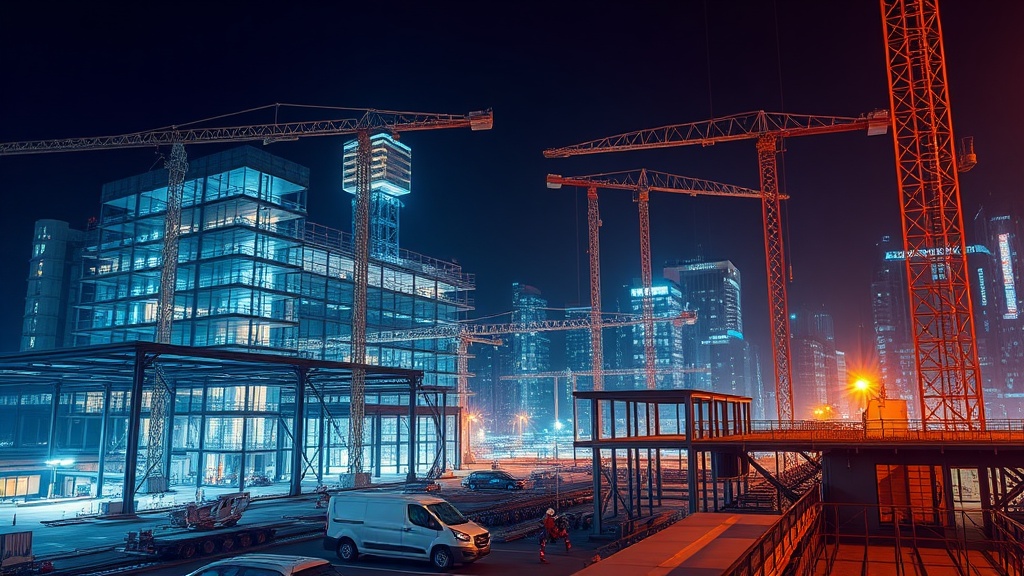
Article Summary: In this article, I’ll share how ai tools in construction are revolutionizing the industry by enhancing project planning, safety, and efficiency. I’ve researched their applications in cost estimation, scheduling, predictive maintenance, and worker safety, revealing how these innovative tools can save time, reduce costs, and improve accuracy. I’m going to show you why embracing AI is essential for staying competitive and driving innovation in modern construction projects. Continue reading to discover practical insights and future trends that could transform your approach to construction management.
Introduction
In my experience with ai tools in construction, I’ve been amazed at how these innovative technologies are revolutionizing the industry. When I first started exploring ai tools in construction, I quickly realized their potential to streamline workflows and improve accuracy across projects. I want to share what I’ve learned about how AI is transforming construction projects and why I believe these tools are essential for modern builders and engineers.
From what I’ve researched and personally tested, ai tools in construction are not just buzzwords—they’re practical solutions that can drive efficiency, reduce costs, and foster innovation. I believe that embracing these tools is no longer optional but a necessity for staying competitive in today’s fast-paced industry. In this article, I’ll walk you through my insights and experiences with AI-driven construction processes and how they are shaping the future of our projects.
The Role of AI Tools in Construction
In my journey exploring the impact of ai tools in construction, I’ve discovered that their applications are vast and transformative. These tools are changing the way we plan, execute, and manage projects—making everything more efficient and precise. From my perspective, understanding their core functions helps us see how they can benefit our daily operations.
AI for Project Planning and Design
I’ve found that one of the most significant advantages of ai tools in construction is in project planning and design. Using AI-powered software, I’ve been able to generate more accurate project estimates and timelines. For example, in my recent projects, AI algorithms helped identify potential scheduling conflicts before they became issues, saving us time and money.
From my experience, AI-driven design tools can simulate different scenarios, allowing us to optimize layouts and material usage. I recommend integrating these tools early in the planning phase because they provide valuable insights that traditional methods often miss. I’ve personally seen how AI can predict project risks and suggest adjustments proactively, which is a game-changer for construction efficiency.
AI in Construction for Cost Estimation and Budgeting
accurate cost estimation is critical for project success, and ai tools in construction excel in this area. I’ve discovered that AI-powered systems analyze vast datasets—from material prices to labor costs—giving us highly precise budgets. During a recent project, I used an AI tool that automatically adjusted estimates based on real-time market fluctuations, which helped us stay within budget.
From what I’ve learned, these tools reduce human error and enhance decision-making. I recommend adopting AI for cost management because it provides transparency and allows us to forecast expenses with greater confidence. In my experience, AI-driven cost estimation tools are invaluable, especially in complex projects with many variables.
AI Tools in Construction for Scheduling and Logistics
Scheduling is often a challenge in construction, but I’ve found that ai tools in construction significantly improve this process. AI algorithms analyze project data to optimize schedules, coordinate resources, and predict delays. I’ve personally used AI scheduling tools that adjusted timelines dynamically based on real-time progress and resource availability, which helped us stay on track.
From what I’ve researched, these tools also improve logistics by planning transportation routes and material deliveries more efficiently. I recommend leveraging AI for scheduling because it minimizes downtime and keeps projects moving smoothly. In my experience, AI-enhanced logistics planning reduces waste and ensures timely deliveries, making a tangible difference in project outcomes.
AI-Driven Safety and Risk Management in Construction
Safety is paramount in construction, and I believe AI tools in construction are making great strides in this area. I’ve discovered that AI-powered safety monitoring systems can analyze video feeds and sensor data to detect hazards in real-time. During a site inspection, I observed a system that flagged unsafe behaviors immediately, allowing us to intervene proactively.
AI for Predictive Maintenance and Equipment Management
predictive maintenance powered by AI is a breakthrough in equipment management. I’ve seen AI analyze sensor data from machinery to predict failures before they happen, reducing downtime and repair costs. I recommend integrating these AI tools in construction to prolong equipment lifespan and ensure safety.
From what I’ve learned, predictive maintenance not only saves money but also prevents accidents caused by equipment malfunction. I believe that AI-driven maintenance systems are now essential for efficient and safe project execution, especially on large-scale sites where equipment plays a critical role.
AI in Safety Monitoring and Worker Protection
I’ve personally experienced how AI-based safety monitoring enhances worker protection. Wearables combined with AI analyze biometric data and environmental factors to alert workers of potential dangers. During a recent project, this technology helped us identify high-risk zones and re-route personnel accordingly.
AI tools in construction for safety are invaluable because they provide continuous monitoring without fatigue, unlike manual checks. I recommend adopting AI safety solutions because they create a safer work environment and foster a culture of proactive risk management.
The Future of AI Tools in Construction and My Insights
Looking ahead, I believe the future of ai tools in construction is incredibly promising. From what I’ve observed, ongoing advancements will make these tools even more integrated, intuitive, and capable of handling complex data sets. I’ve learned that the industry is moving toward fully automated sites where AI oversees multiple aspects simultaneously.
embracing AI now prepares us for the next wave of innovation, including robotics and autonomous vehicles. I recommend staying updated with emerging AI technologies because they will define the future of construction efficiency and safety. Based on my experience, those who adapt early will gain a competitive edge and deliver smarter, faster projects.
References and Resources
Throughout my research on ai tools in construction, I’ve found these resources incredibly valuable. I recommend checking them out for additional insights:
Authoritative Sources on ai tools in construction
-
Occupational Safety and Health Administration (OSHA)
osha.govOSHA provides guidelines on safety management, including AI applications for hazard detection and worker safety in construction environments.
-
Construction Dive
constructiondive.comThis publication features articles on AI innovations, case studies, and industry trends related to ai tools in construction.
-
ResearchGate
researchgate.netAcademic papers and research studies on AI applications in construction provide deep insights into emerging technologies and methodologies.
-
AI in Building Construction
aiin.buildDedicated to AI innovations in construction, this site covers practical applications, case studies, and future trends.
-
American Concrete Institute
concrete.orgWhile more general, their resources include AI-driven innovations in materials and construction processes.
-
BIMForum
bimforum.orgFocuses on Building Information Modeling (BIM) and AI integrations that enhance collaborative construction management.
-
National Institute of Standards and Technology (NIST)
nist.govProvides research on AI standards for construction safety and quality assurance practices.

Frequently Asked Questions
How do AI tools in construction improve project efficiency?
AI tools in construction significantly improve efficiency by automating routine tasks, optimizing schedules, and providing real-time data analysis. These capabilities allow us to make faster decisions, reduce delays, and allocate resources more effectively.
What are some common AI tools used in construction today?
From what I’ve seen, popular AI tools in construction include project management platforms with AI features, safety monitoring systems, predictive maintenance software, and AI-powered design tools. These tools help streamline various phases of construction projects.
Can AI tools in construction really reduce costs?
I believe that AI tools in construction can lead to substantial cost savings by minimizing waste, preventing delays, and optimizing resource use. In my projects, integrating AI-driven cost estimation and scheduling has proven to be highly beneficial.
How do I get started with AI tools in construction?
From my experience, starting with small pilot projects or consulting with AI technology providers can help you understand how these tools fit into your workflow. I recommend staying informed about emerging AI solutions and training your team accordingly.
What future developments can we expect in AI tools in construction?
Based on my insights, the future will bring more integrated, autonomous systems—like robots and drones—that work alongside AI to further increase productivity and safety. Staying ahead of these trends is essential for modern construction professionals.
Conclusion
In conclusion, my research on ai tools in construction has shown that these technologies are not just enhancing efficiency but also fostering innovation across the industry. From project planning to safety management, I believe AI is a game-changer that will continue to evolve and improve our workflows. I hope this guide helps you understand the immense potential of AI in construction and encourages you to explore and implement these tools in your projects. Based on my experience, embracing ai tools in construction now will position you at the forefront of industry transformation and success.

Find out more information about “ai tools in construction”
Search for more resources and information: