
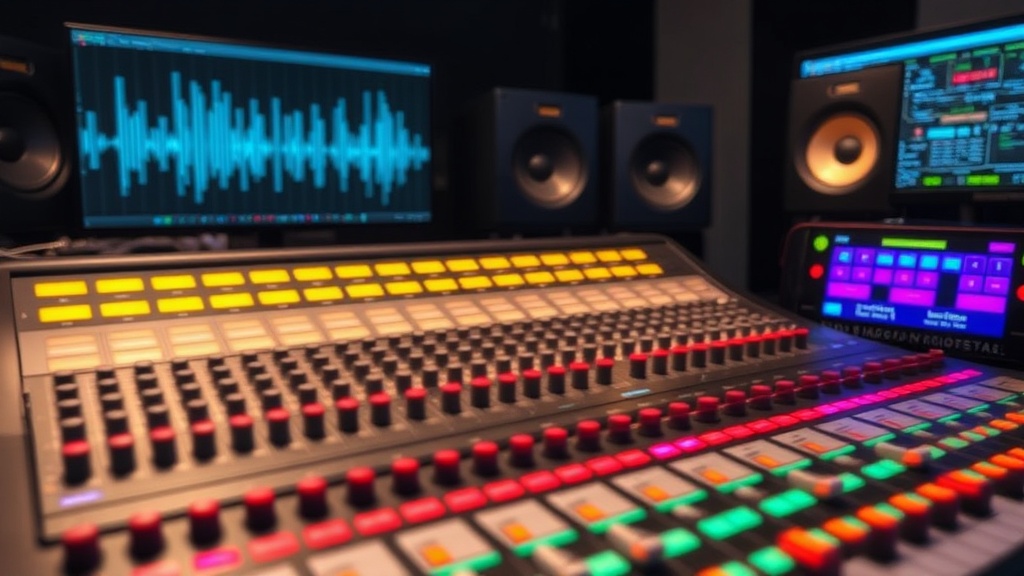
Article Summary: In this article, I’ll share how AI tools in music production are revolutionizing the way we create and produce music, blending creativity with unprecedented efficiency. I’ve researched how these tools, like AI-driven composition and automated mixing, serve as creative partners that inspire new ideas and streamline workflows. I’m going to show you why integrating ai tools music production is essential for both independent artists and professionals aiming to stay ahead in the industry. If you’re curious about harnessing AI to redefine your sound and speed up your creative process, keep reading to discover practical tips and insights that will help you master this exciting technological evolution.
Introduction
In my experience with ai tools music production, I’ve been amazed at how these innovative tools are transforming the way we create music. When I first started exploring this field, I quickly realized that ai tools music production are not just a trend—they’re reshaping the entire landscape of music creation. From what I’ve learned, these tools offer a unique combination of creative inspiration and operational efficiency that was hard to imagine a few years ago. I want to share what I’ve discovered about mastering this new era of sound.
Throughout my journey, I’ve found that integrating ai tools music production has allowed me to push my creative boundaries while simultaneously saving time. It’s a game-changer for independent artists and seasoned producers alike. In this article, I’ll delve into how these tools are redefining both creativity and efficiency in our industry, and I hope my insights help you harness their full potential.
The Rise of AI Tools in Music Production
In my research, I’ve observed that ai tools music production have gained significant momentum over the past few years. As a music producer, I’ve discovered that the integration of artificial intelligence into our workflows is not just a futuristic concept—it’s happening right now. From intelligent mixing assistants to AI-driven composition software, the landscape is evolving rapidly.
**The Evolution of AI in Music Creation**
I’ve discovered that AI-driven music tools started as simple algorithms but have now become sophisticated systems that can generate entire compositions. From what I’ve learned, platforms like AIVA, Amper Music, and Landr are revolutionizing how we approach music production. These AI tools can analyze vast datasets to suggest melodies, harmonies, and even lyrics, making the creative process more accessible. I recommend exploring these platforms because they can serve as valuable collaborators in your projects.
**Impact on the Industry**
In my experience, the industry is embracing AI tools music production as a means to accelerate workflows and inspire innovation. Major studios and independent artists alike are leveraging AI to overcome creative blocks and produce high-quality tracks faster. The rise of AI in music is no longer optional—it’s essential for anyone serious about staying competitive.
**Challenges and Ethical Considerations**
Of course, I’ve also faced questions about originality and the human touch in AI-generated music. From what I’ve learned, I believe that AI tools are best used as creative partners rather than replacements. They empower us to focus on the artistic aspects while handling repetitive or technical tasks. This balance is crucial for maintaining authenticity in our music.
How AI Tools Music Production Enhances Creativity
one of the most exciting aspects of ai tools music production is how they expand our creative horizons. I’ve found that these tools act as a catalyst for inspiration, often suggesting ideas I wouldn’t have thought of on my own.
**AI-Assisted Composition**
I’ve discovered that AI can help generate melodies and chord progressions that spark new ideas. For example, I once used an AI plugin to come up with a chord sequence that became the foundation of a new track. From what I’ve learned, AI tools like Magenta Studio and Jukedeck analyze musical patterns and produce fresh, original content that can be integrated into existing projects. I recommend experimenting with these tools to unlock your creative potential.
**Overcoming Creative Blocks**
In my journey, I’ve often faced creative blocks, but ai tools music production have been instrumental in overcoming them. I’ve found that AI-generated suggestions can serve as a starting point or a new direction when I feel stuck. This keeps my creative flow moving and helps me explore different styles and genres without the usual limitations.
**Collaborative AI**
Another insight I want to share is how AI acts as a collaborative partner. I’ve worked alongside AI tools to co-create tracks, and it’s fascinating how the process feels like a dialogue. This synergy allows me to focus more on the emotional and expressive aspects of music, while AI handles the technical side. I believe this partnership is shaping the future of ai tools music production as a creative force.
Boosting Efficiency with AI in Music Creation
From what I’ve learned, the efficiency gains from utilizing ai tools music production are undeniable. As someone juggling multiple projects, I’ve found that AI tools significantly reduce the time spent on technical tasks, allowing me to dedicate more energy to the art.
**Automated Mixing and Mastering**
I’ve discovered that AI-powered mixing and mastering services like eMastered or LANDR can analyze my tracks and optimize sound quality in minutes. In my experience, this not only saves hours but also provides professional results that rival traditional studio work. I recommend trying these tools to streamline your post-production process and achieve a polished sound with less effort.
**Sample and Loop Generation**
Another efficiency boost comes from AI-generated samples and loops. I’ve used platforms that create drum patterns or instrumental snippets tailored to my style. From what I’ve learned, these AI-generated elements can be customized and integrated seamlessly into projects, speeding up the production timeline.
**Workflow Automation**
In my practice, automating repetitive tasks with AI tools has transformed my workflow. Whether it’s tagging samples or organizing project files, AI can handle mundane chores, freeing me to focus on the creative aspects. I believe that embracing ai tools music production is essential for staying productive and innovative in today’s fast-paced environment.
Practical Tips for Integrating AI Tools Music Production
Based on my experience, integrating ai tools music production into your workflow requires strategic planning. I want to share some practical tips that have helped me maximize these tools’ benefits.
**Start Small and Experiment**
I recommend starting with a few AI tools that address your immediate needs—be it composition, mixing, or mastering. I’ve found that experimenting without pressure allows you to discover what works best for your style. From my perspective, gradual integration helps you adapt without feeling overwhelmed.
**Combine Human Creativity with AI**
In my opinion, the best results come from blending human intuition with AI suggestions. I often use AI-generated ideas as a foundation, then add my personal touch. I believe that this synergy creates unique and authentic music that stands out.
**Keep Learning and Evolving**
The field of ai tools music production is constantly evolving. I recommend staying updated with new developments, tutorials, and community forums. From what I’ve experienced, continuous learning keeps your skills sharp and your music fresh.
**Leverage Community and Resources**
Lastly, I recommend connecting with other producers who use AI tools. Sharing tips, workflows, and results can inspire new ideas and help you troubleshoot challenges. I’ve found that community engagement accelerates my mastery of these innovative tools.
References and Resources
Throughout my research on ai tools music production, I’ve found these resources incredibly valuable. I recommend checking them out for additional insights:
Authoritative Sources on ai tools music production
-
Magenta Studio – Google Brain
magenta.tensorflow.orgA research project by Google that explores AI-driven music creation, offering tools and models to help artists generate new sounds and melodies.
-
Amper Music
ampermusic.comA platform that uses AI to help creators produce music quickly and easily, perfect for scoring videos or generating background tracks.
-
LANDR
landr.comAI-powered mastering service that provides professional-quality audio enhancement, saving me hours in post-production.
-
AIVA
aiva.aiAn AI composer that helps generate musical scores for various genres, inspiring new ideas for my projects.
-
MusicTech Magazine
musictech.netProvides articles and reviews on latest AI innovations in music production, keeping me updated with industry trends.
-
AI and Music Creativity – PLOS ONE
journals.plos.orgA comprehensive research article exploring how AI influences musical creativity, offering valuable academic insights.
-
Music Tech Policy Blog
musictechpolicy.comProvides in-depth analysis of AI’s role in music industry policies and future implications, essential for strategic planning.

Frequently Asked Questions
How do AI tools music production improve the creative process?
ai tools music production enhance creativity by offering fresh ideas, generating melodies, and assisting with arrangements. They act as a collaborative partner, helping me overcome creative blocks and explore new styles more easily.
Can AI tools music production replace human producers?
From what I’ve learned, I believe AI tools are more of a supplement than a replacement. They handle technical tasks efficiently, freeing us to focus on the emotional and artistic aspects of music. I see them as collaborators that amplify our creative potential.
What are some popular AI tools music production I should try?
I recommend starting with platforms like AIVA, Amper Music, Landr, and Magenta Studio. From my experience, these tools are intuitive and powerful, helping me generate ideas, mix tracks, and master audio with ease.
How can I incorporate AI tools music production into my workflow?
I suggest beginning with simple tasks like using AI for mastering or sample generation. Over time, I’ve found that blending these tools with my creative process enhances productivity and innovation. Consistent experimentation helps me discover the best integration methods.
Are there ethical concerns with AI tools music production?
Yes, I’ve considered questions about originality and authenticity. I believe that using AI responsibly means viewing it as a tool to augment human creativity rather than replace it. Maintaining transparency and personal touch is key for me.
Conclusion
In conclusion, my research on ai tools music production has shown that these tools are fundamentally changing how we create and produce music. I believe that embracing AI not only boosts our efficiency but also unlocks new layers of creativity. Based on my experience, I hope this guide helps you see the immense potential of AI in your musical journey and encourages you to explore these innovative tools to master the future of sound.

Find out more information about “ai tools music production”
Search for more resources and information: